Interactive EFT Tapping Points Guide & Animation. (With FREE Chart)


Many people want a simple way to lower stress, ease anxiety or reduce unhelpful thoughts. One approach that combines Psychology with traditional Chinese medicine is called Emotional Freedom Technique or EFT. At its core, it involves EFT tapping points (Karate chop point, Top of head, Eyebrow, Side of eye, Under eye, Under nose, Chin, Collarbone, Under arm).
These points are linked to meridian points in the body. When you tap them while thinking about a personal concern, you may feel less tension and more calm. This article explains each major tapping spot, how they connect to energy flows and why so many find tapping works for mental and emotional relief. Here, you’ll learn how to include EFT in your life without extra fuss. If you’ve been curious about why people tap part of the body like the top of the head or the karate chop point, you’ll find clear answers and easy steps to follow.
Curious how this ties into the full EFT process? See our comprehensive guide.
We will start by mapping the EFT tapping points in detail. Next, we’ll discuss how these points connect to your body’s small intestine meridian and other channels that help energy move freely. We’ll then walk through a simple routine for identifying the issue, tapping the right spots and promoting self-acceptance. The aim is to offer a hands-on guide that benefits both beginners and long-time users of emotional freedom technique (EFT). By the end, you’ll see how these steps can ease concerns such as worry, self-doubt, or even stress tied to past events, including certain post traumatic stress disorder symptoms.
What are the EFT tapping points?
EFT, also called emotional freedom technique, directs attention to tapping on specific points of the body. Practitioners trace this idea back to traditional Chinese medicine, which teaches that energy moves along meridians. Think of these meridians like pathways that carry life force. When they’re clear, emotions tend to stay in balance. When they’re clogged, you might feel on edge or stuck.
These tapping points often include:
- Karate Chop Point: Found on the side of the hand, where you might strike a board in martial arts.
- Top of the Head: Centered on the highest spot of your scalp.
- Eyebrow Point: At the inner edge of your eyebrow, just above the nose.
- Side of the Eye: At the bone on the outer corner of the eye.
- Under the Eye: Just below the pupil, above the cheekbone.
- Under the Nose: Between your nose and upper lip.
- Chin Point: In the slight dip between your lower lip and chin.
- Collarbone Point: Under your collarbone, a bit next to your sternum. “Practitioner Note: In my sessions, I find this point particularly effective for clients dealing with panic attacks because it resets the adrenal response.”
- Under the Arm: A few inches below your armpit, on the side of the body.
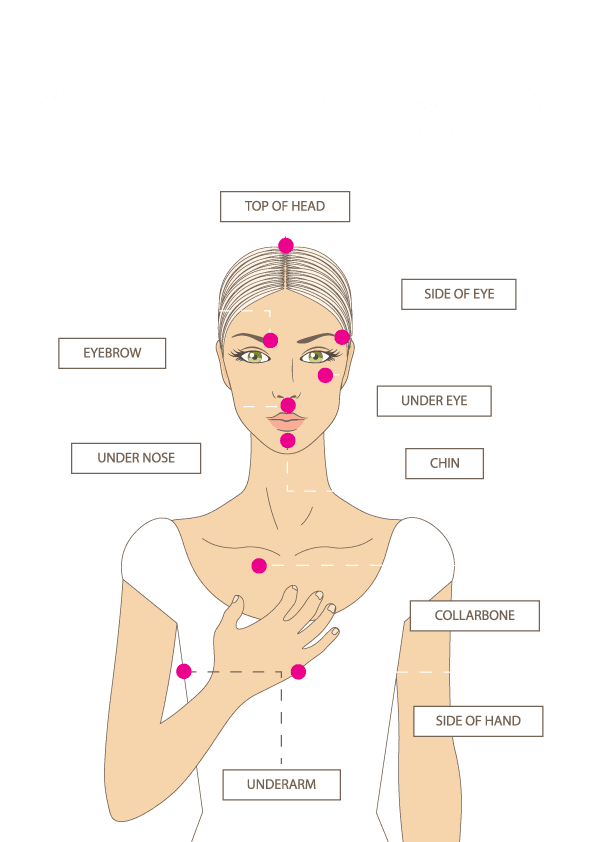
People tap these locations because each spot ties to a meridian point that may shift how the mind and body process stress. Some find it odd at first, but many report feeling calmer after a few minutes.
Karate Chop Point (Side of Hand)
Where it is
You’ll find this point on the outer edge of your hand, halfway between the wrist and the base of the little finger. It’s the soft, padded area you’d use if you were gently chopping something — hence the name.
Meridian connection
Small Intestine meridian.
Why practitioners start here
This point isn’t about technique — it’s about honesty.
Most people come to tapping because they want something to change. Less anxiety. Less emotional charge. More ease. What’s less obvious is that part of the system often doesn’t feel ready for that change yet. It might be protective. It might be sceptical. It might be tired of trying.
Starting on the side of the hand gives space for that to exist.
When you tap here while saying the setup statement, you’re not trying to convince yourself of anything. You’re acknowledging what’s already true. That alone can reduce internal tension before you even move through the rest of the points.
From a traditional Chinese medicine perspective, the Small Intestine meridian is linked with sorting and discernment — separating what’s useful from what isn’t. In practice, this often shows up emotionally as mental conflict, second-guessing, or a sense of being stuck between two positions. That’s why this point works so well for phrases that include both the problem and self-acceptance.
It’s not about positivity. It’s about reducing resistance.
How to work with it
There’s no need to rush this point.
Tap steadily while repeating your setup statement two or three times. If the words feel awkward or false, adjust them. That discomfort is information, not a mistake.
If someone says, “I don’t really believe this will work,” that belongs in the setup.
If they feel frustrated with themselves for still struggling, that belongs here too.
Either hand is fine. Precision matters far less than staying present. When this point is skipped or glossed over, tapping often feels superficial. When it’s done properly, the rest of the round tends to move more easily.

Top of Head (Crown)
Where it is
This point sits right at the top of the head. If you lightly tap around and feel for the highest point of the skull, you’ll find it without much effort.
Meridian connection
Governing Vessel.
Why practitioners use it
This point often feels subtle, but it does a lot of quiet work.
In sessions, it’s the place where things start to settle. After tapping through emotional material, people often report that their thoughts slow down or that everything feels less fragmented. It’s not always dramatic — more like the nervous system catching its breath.
Because the Governing Vessel runs along the midline of the body, tapping here tends to support overall regulation rather than targeting one specific emotion. That’s why many practitioners include it toward the end of a round, when the system needs help integrating what’s just been touched.
It’s also a useful point when someone starts to feel mentally overloaded. A few taps here can bring things back into balance before continuing.
How to work with it
Use light taps. More pressure doesn’t make it work better.
This point pairs well with simple language — or even silence. Some people prefer to tap here without words and just notice what changes. If breathing deepens or the body softens, that’s usually a sign the system is settling.

Eyebrow Point
Where it is
At the inner edge of the eyebrow, close to the bridge of the nose.
Meridian connection
Bladder meridian.
Why practitioners use it
This point is closely linked with ongoing stress and vigilance.
It often comes alive when someone has been “holding it together” for a long time. There may not be a single triggering event — just a constant sense of pressure, worry, or alertness that never fully switches off.
In practice, this is where people begin to notice how much tension they’re carrying in their face and head. Even without naming specific thoughts, tapping here can start to reduce that background strain.
It’s common for emotions to feel a little clearer after this point, simply because the nervous system is no longer bracing in the same way.
How to work with it
Invite attention to sensation rather than story.
People often notice changes in eye focus, forehead tightness, or breath. Those shifts matter. There’s no need to push for insight — this point responds well to gentle awareness.

Side of the Eye
Where it is
On the bone at the outer corner of the eye, not on the temple itself.
Meridian connection
Gallbladder meridian.
Why practitioners use it
This point is where frustration and irritation tend to show up.
It’s common to hear things like, “I didn’t realise how annoyed I was until I tapped here.” That’s because this area often holds emotion that’s been pushed aside in order to function or keep the peace.
The Gallbladder meridian is associated with decision-making and forward movement. When that energy feels stuck, people can feel trapped, resentful, or rigid in their thinking. Tapping here helps loosen that grip, sometimes without needing to analyse the situation at all.
How to work with it
Go gently — this point can be sensitive.
Notice the jaw, neck, and shoulders as you tap. When those areas soften, it’s often a sign that something has shifted emotionally, even if the words haven’t changed yet.

Under the Eye
Where it is
Directly below the pupil, on the bone under the eye.
Meridian connection
Stomach meridian.
Why practitioners use it
This is one of the most reliable points for anxiety that’s felt in the body.
People often describe sensations here as butterflies, tightness, or a hollow feeling in the stomach. Even when the mind knows things are okay, the body may still be braced.
Because the Stomach meridian relates to digestion and processing, tapping here helps the system “digest” emotional experience rather than staying stuck in a stress response.
How to work with it
Breath matters here.
Slow exhales tend to amplify the effect of tapping at this point. If someone feels shaky or unsettled, spending a little longer here often brings noticeable relief.

Under the Nose
Where it is
Between the base of the nose and the upper lip.
Meridian connection
Governing Vessel.
Why practitioners use it
This point often touches emotions people don’t talk about easily — shame, embarrassment, or a sense of feeling exposed.
In sessions, tapping here can bring a noticeable emotional response, even when the issue hasn’t been fully articulated. That doesn’t mean something is “wrong”; it usually means you’re close to the core of the experience.
This point can help bring steadiness when someone feels small, powerless, or overly self-conscious.
How to work with it
If the area feels tender, reduce pressure.
Slowing down here helps. Silence can be more effective than words if emotions feel close to the surface.

Chin Point
Where it is
In the indentation between the lower lip and the chin.
Meridian connection
Central Vessel (Conception Vessel).
Why practitioners use it
This point often reflects inner dialogue.
It’s common for doubts, conflicting thoughts, or self-criticism to show up here. People might feel torn between what they think they should do and what they actually feel capable of doing.
Tapping here doesn’t force clarity, but it can soften the internal argument enough for something new to emerge.
How to work with it
Pause here when uncertainty is present.
You don’t need to resolve anything while tapping. Simply acknowledging the confusion often changes the tone of the inner conversation.

Collarbone Point
Where it is
Just below the collarbone, slightly out from the sternum, in a small hollow.
Meridian connection
Kidney meridian.
Why practitioners use it
This is one of the most stabilising points in EFT.
When someone feels anxious, panicky, or ungrounded, tapping here often brings a sense of support. The Kidney meridian is associated with survival and safety, which is why this point can feel reassuring at a physical level.
It also naturally encourages fuller breathing, which helps calm the nervous system.
How to work with it
A steady, comfortable rhythm works well.
Many people instinctively take a deeper breath after tapping here. Let that happen — it’s part of the regulation process.

Under the Arm
Where it is
On the side of the body, a few inches below the armpit.
Meridian connection
Spleen meridian.
Why practitioners use it
This point often holds long-standing worry and emotional fatigue.
People who carry responsibility for others, or who spend a lot of time overthinking, frequently feel something shift here. It’s less about sudden release and more about easing a heavy load.
Because the Spleen meridian is linked with processing and nourishment, tapping here can help restore a sense of emotional steadiness.
How to work with it
Slightly slower tapping tends to work well.
Notice changes in the torso or breath. When this point softens, people often report feeling lighter or more supported overall.

What to Say: The “Setup Statement” Formula
Knowing where to tap is only half the equation. To truly shift energy, we must combine the physical stimulation with cognitive focus. In clinical EFT, we use a specific linguistic framework designed to bypass the brain’s defensive barriers.
The Setup Phrase (Karate Chop Point) We start here to correct “Psychological Reversal”—a subconscious resistance to healing. While tapping the side of your hand, repeat this phrase three times:
“Even though I have this [Name the Problem], I deeply and completely accept myself.”
The Reminder Phrase (Points 2–9) For the remaining points, we strip the language down to keep the amygdala focused on the issue. You don’t need long sentences. Just use a short “Reminder Phrase” to describe the visceral feeling:
- “This anxiety in my chest…”
- “This sharp anger…”
- “This fear of failure…”
Pro Tip: Authenticity beats positivity. Don’t rush to tap on “I am calm” until you have first acknowledged and tapped on “I am stressed.” You must clear the weeds before you plant the flowers.
How Tapping Works with Energy Flows
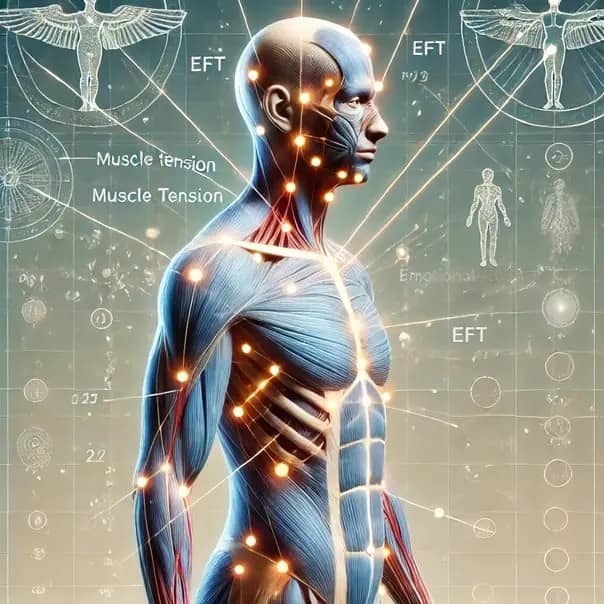
Imagine your body as a circuit. When the circuit is complete, everything is lit up and runs smoothly. But if there’s a break or short, the flow gets disrupted. That’s how some describe the effect of emotional stress. You may feel heavy, be at unease, or experience racing thoughts.
on EFT tapping points can help re-establish that flow. The karate chop point is linked to the small intestine meridian. Tapping here while stating “I deeply and completely accept myself” helps you address self-judgment. Meanwhile, tapping on the top of the head may help calm a racing mind because multiple meridians meet in that area. If you’re unsure, ask yourself: “Do I feel lighter when I tap?” Often, the answer is yes, which is why so many believe tapping works
Identifying the Issue: The First Key Step
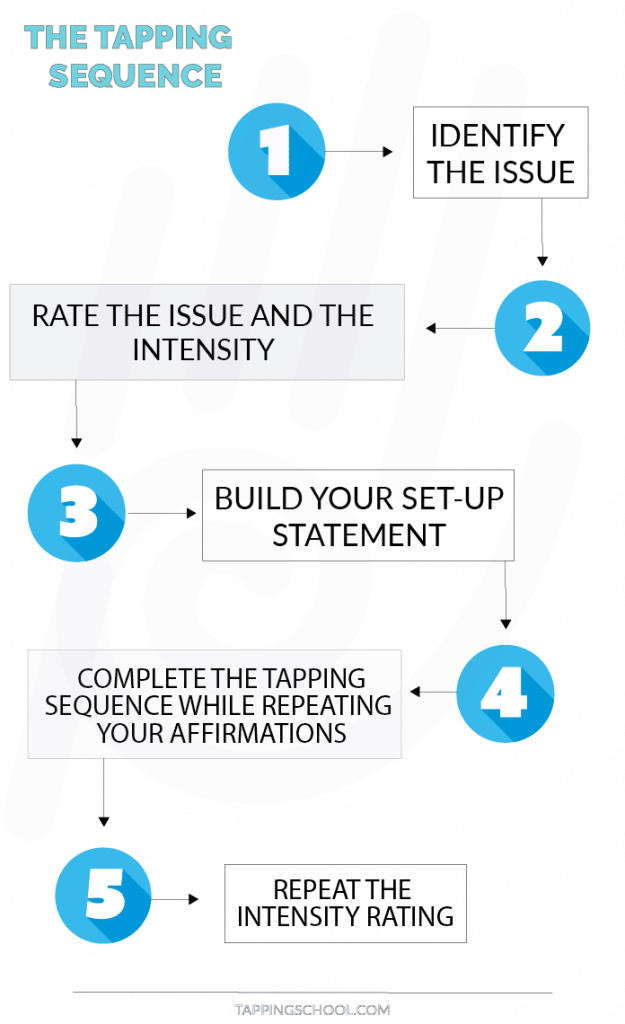
Before you start tapping, you need to name the concern you want to target. This is called identifying the issue. It might be a fear of speaking up at work, or setting boundaries with a close family or friend. Ask yourself what the biggest stressor for youis right now. Aim to be as clear as possible.
For example, let’s say your concern is panic before a big presentation. Keep that event in mind as you tap. Repeat a simple statement like, “Even though I’m nervous about this talk, I deeply and completely accept myself.” This phrase is short, direct, and leaves no room for second-guessing.
“Even though I’m nervous about this talk, I deeply and completely accept myself.”
The Basic Tapping Sequence
- Setup Statement
- Tap on the karate chop point.
- Say something like, “Even though I feel nervous about this talk, I deeply and completely accept myself.”
- Repeat this line at least three times, focusing on the feeling.
- Move Through the Main EFT tapping Points
- Eyebrow Point: “This nervousness about my talk.”Side of the Eye: “My legs feel shaky.”Under the Eye: “What if I forget my lines?”Under the Nose: “This pressure keeps building.”Chin Point: “I worry people will judge me.”Collarbone Point: “I can’t get rid of this fear.”Under the Arm: “I feel it in my stomach.”
- Top of the Head: “This deep concern about messing up.”
- Check Your Progress
- Pause and notice if you feel calmer.
- Rate your worry on a 0-10 scale. Has it dropped? If not, try another round.
Using phrases that match your real feelings keeps you engaged. Some people add, “I choose to feel calm,” once their tension level drops. This inserts a positive thought into the cycle.
Key Examples of How to Adjust Your Words
- If you struggle with self-criticism, say, “Even though I find fault in my work, I deeply and completely accept my efforts.”
- If you’re upset with a coworker, say, “Even though I feel frustrated, I deeply and completely accept my feelings.”
- If you’re sad about a missed chance, say, “Even though I’m disappointed, I deeply and completely accept my situation.”
These targeted phrases help you speak your truth. After all, it’s much easier to change a feeling when you’ve named it.
The Biology of Calm: Amygdala & Cortisol
EFT is often described as “acupuncture without needles,” but the physiological mechanism is firmly rooted in modern neuroscience.
When you experience stress or trauma, your amygdala (the brain’s “smoke detector”) initiates the fight-or-flight response, flooding your body with stress hormones. Tapping on these specific meridian endpoints sends a calming electrochemical signal directly to the amygdala, effectively telling your brain, “You are safe. You can stand down.”
This isn’t just a placebo. Landmark clinical studies have shown that a single hour of EFT tapping can reduce cortisol (the primary stress hormone) levels by 43%.
- Compare this to traditional talk therapy, which typically sees only a 19% reduction in the same timeframe.
By physically down-regulating the nervous system, Tapping allows you to process emotions without being re-traumatized by them.
Practical Tips for Success
Thought-Provoking Questions to Ponder
- What personal fears stop you from speaking up at work?
- Have you noticed times when your body reacts before your mind knows why?
- Could tapping for a few minutes daily shift your mood or outlook?
- Would it help to name deeper issues, such as regret or guilt, and tap on those?
Asking these questions can ignite curiosity. You might find that you hold tension in certain spots, like your shoulders or belly, whenever you think about a stressful event.
Troubleshooting: Why It Might Not Be Working (Yet)
If you aren’t feeling a shift after a few rounds, you likely aren’t doing it “wrong”—you just need to calibrate. In my clinical practice, these are the three most common adjustments we make:
1. You Are Being Too Vague The brain handles “Global” issues poorly. Instead of tapping on “My Stress,” try to be surgically specific. Tap on “This tight knot in my stomach about tomorrow’s meeting.” The more specific the target, the better the result.
2. You Are “Positive Bypassing” It is tempting to tap on positive affirmations immediately. However, EFT works best when we face the negative first. We must acknowledge the truth of how we feel (the anger, the sadness, the pain) to release it. As the saying goes: “You have to feel it to heal it.”
3. Dehydration Since we are dealing with the body’s electrical system, hydration matters. Water conducts electricity. If you feel stuck or “foggy” during a session, pause, drink a glass of water, and begin again.
Balancing Technical Terms with Plain Talk
You’ll notice references to the small intestine meridian or traditional Chinese medicine. While these terms sound technical, you don’t need to memorise every detail to benefit from EFT. The key is steady practice. Tapping on areas like the upper lip (under the nose), the collarbone, or the side of the body can bring relief, even if you’re new to this method.
By mixing direct statements with tapping, you create a self-soothing loop. Your body feels the gentle taps. Your mind hears your focus on the problem. Over time, many individuals realize they can release heavy emotions in this way.
Frequently Seen Results
- Reduced Stress: People often report a lighter feeling afterward.
- Better Self-Acceptance: Tapping helps you see your own worth more clearly.
- Clearer Mind: By quieting anxious thoughts, you can plan and act with more ease.
- Better Sleep: Some try tapping right before bed to let go of worries.
These benefits vary, but the general pattern is positive. The goal is to interrupt negative cycles and remind the body and mind that they can relax.
Need to personalise your tapping? Try our EFT Script Generator.
Final Thoughts
EFT Tapping offers a direct way to address stuck emotions by tapping on EFT tapping points while speaking simple truths. It’s grounded in concepts from traditional Chinese medicine, linking meridian points to emotional well-being. By identifying the issue clearly and tapping on the right locations, you may lessen the grip of fear, shame, or sadness. You might also find relief from anxious responses tied to past events, including certain post traumatic stress triggers.
Give it a try. Pick a small concern, state it, and tap through the sequence. Notice if your body feels more relaxed. You may discover that short, daily sessions make a big difference in your mood and focus. After all, EFT doesn’t require specialised equipment or long training. It simply calls for a bit of time, a willingness to speak your feelings and gentle taps on specific points of your body.
If you want to explore more, seek guidance from qualified trainers or manuals that detail the full range of spots. But don’t wait for the “perfect moment.” A brief round of tapping can be done anywhere—before a meeting, during a break, or right after you wake up. You never know which round might help you drop stress and move forward with greater confidence.
References:
- Eigenschink M, Dearing L, Dablander TE, Maier J, Sitte HH. A critical examination of the main premises of Traditional Chinese Medicine. Wien Klin Wochenschr. 2020;132(9-10):260-273.
- Longhurst JC. Defining meridians: a modern basis of understanding. J Acupunct Meridian Stud. 2010;3(2):67-74. doi:10.1016/S2005-2901(10)60014-3